
Custom Website Design vs Templates: Which Converts Better?
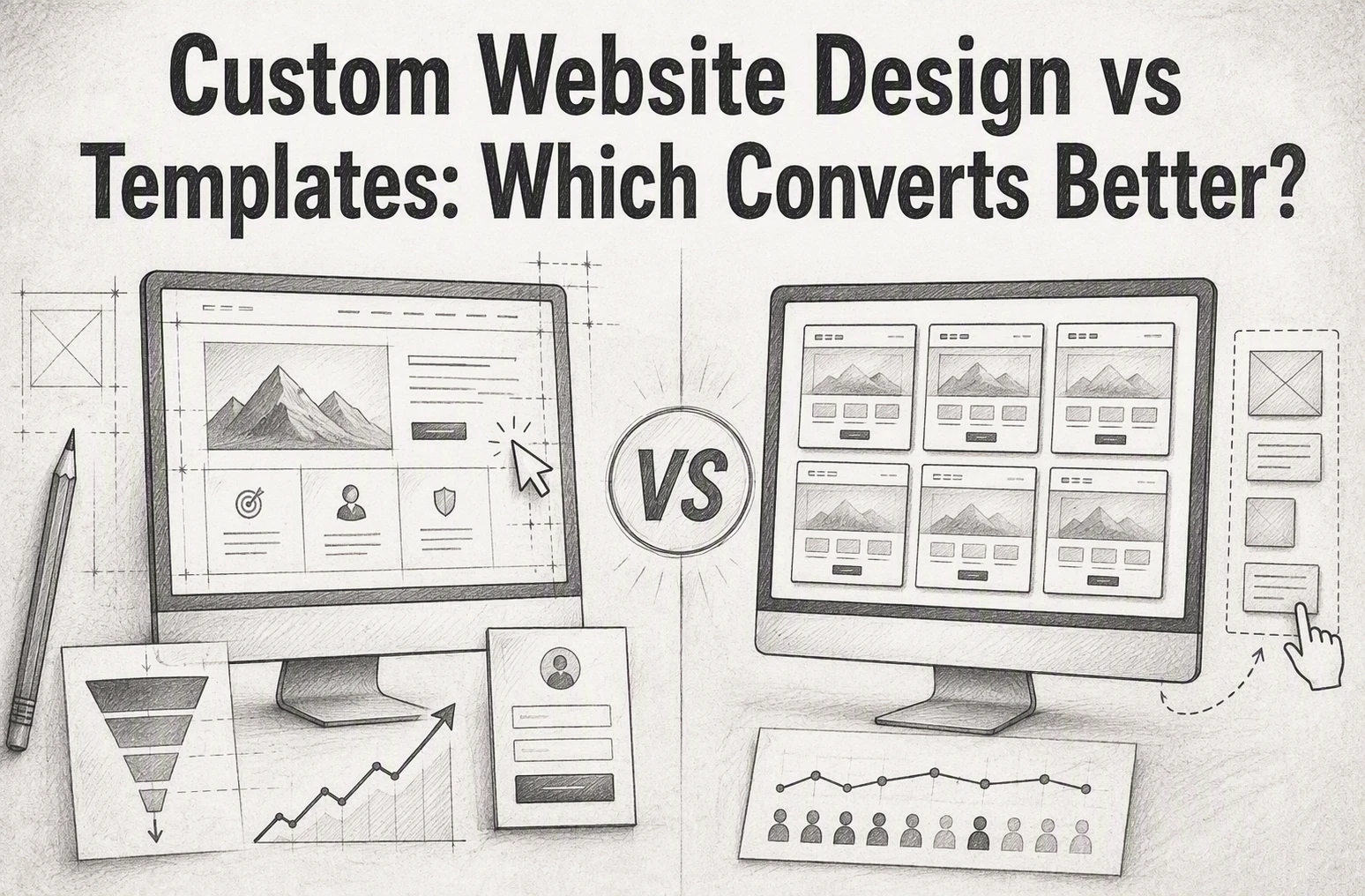
Quick Summary: Custom websites outperform templates for lead-driven businesses because they let you control the exact path from ad click to booking-like a roofer’s mobile quote form optimized for fast submissions. Templates work for quick, low-cost launches but often limit where you place CTAs or how you track calls, forcing workarounds as needs grow. Google’s Core Web Vitals (LCP under 2.5 seconds, INP under 200ms) matter more than aesthetics, but custom sites give you full control over speed, SEO, and integrations to fix bottlenecks. Pick custom if you rely on paid ads or multiple service areas; templates only make sense for simple, one-offer businesses with tight budgets.
A buried phone number can cost a roofer a real lead. In custom website design vs templates, custom often suits firms driven by calls and bookings. Templates suit fast, low-cost launches. Neither guarantees results. This guide weighs conversion, SEO, cost, and growth based on practical local lead-generation work.
Custom Website Design vs Templates: At a Glance
| Custom website design | Template website | |
|---|---|---|
| Conversion strategy | Audience-specific journeys, CTAs, forms, trust signals, and testing | Uses proven generic patterns but may constrain page hierarchy and CTA placement |
| Performance and SEO control | Greater control over markup, scripts, structure, schema, and performance | Adequate for simple sites, with control varying by platform, theme, and configuration |
| Upfront cost and launch speed | Higher investment and usually a longer discovery and build period | Lower investment and faster launch |
| Scalability and integrations | More adaptable to custom workflows, CRM, booking, and advertising systems | Works well within supported features but can require workarounds as needs grow |
| Best fit | Established lead-driven businesses and competitive local markets | Early-stage businesses, simple brochures, tests, portfolios, and tight budgets |
How Custom website design and Template website Compare
Custom website design
A custom site is built around your audience, lead path, brand, and systems. It suits established local businesses that need stronger control over SEO, tracking, forms, and CRM links. ![Service business owner reviewing a tailored website layout with a web strategist] Key strengths
- Tailored calls to action and trust signals
- Flexible SEO, performance, and integrations
Template website
A template site uses a ready-made layout with editable content and styling. It fits new businesses, simple brochure sites, and budget-led tests that need a fast launch.
Which Approach Creates the Stronger Conversion Path?
Conversion Architecture Matters More Than Visual Novelty
A strong path makes the next step obvious: call, request a quote, or book. Custom sites give you more control over page flow, proof, and lead forms. Google also recommends responsive design, and mobile content drives indexing and ranking (Google guidance).

Test the path from ad click to submitted lead before judging design quality.
What Templates Can Still Do Well
Templates work well for simple offers, tight budgets, and fast launches. Pick one with clear service pages, fast mobile layouts, and editable calls to action. Track form fills and calls, then improve the weak page.
Performance and SEO: What Actually Helps Conversions?
Speed Is a User and Advertising Variable
Fast pages make paid clicks easier to use. Aim for a clear page, quick form, and stable layout. Google defines good LCP as 2.5 seconds or less and good INP as under 200 milliseconds in its Core Web Vitals guidance.

Fix speed issues that block calls or form submits before chasing perfect scores.
Technical SEO Control Is a Growth Option
Custom builds give more control over page titles, local service pages, tracking, redirects, and form flows. Templates can handle basics, but limits often surface as campaigns expand.
- Test mobile forms
- Track calls and leads
- Build unique city pages
Also Read: WordPress Design for Small Business Websites
Cost, Ownership, and Long-Term Flexibility
The Cheapest Launch Is Not Always the Lowest-Cost System
A template can cut launch costs, but paid add-ons, redesigns, and workarounds may raise lifetime cost. Compare the full system: hosting, updates, lead tools, and support.
Choose the option that supports your next three years, not just next month.
Ownership and Migration Risk
Ask who owns the domain, site files, design assets, and lead data. The FTC notes that clear data portability can help businesses switch providers and support competition FTC guidance. Custom work should include clear handover terms.
Also Read: Custom Development vs CMS Development: What to Choose
Which Should You Choose: Custom Website Design or a Template?
Choose Custom When the Website Is a Revenue Asset
Choose custom if your site must turn paid clicks and local searches into calls, forms, and booked jobs. It gives you room for clear service paths, unique proof, and lead tracking. Google rewards an overall strong page experience, not one isolated score, according to Google's guidance.
- You run paid campaigns
- You serve several areas or services
- You need CRM or booking links
- You want full control of assets
A custom site should earn its cost through better lead flow, not just looks.
Choose a Template When Simplicity Is the Strategy
Use a template for a new, focused business with one offer and a tight budget. Pick a fast, mobile-friendly option and keep the message direct. Google uses mobile content for indexing and ranking, so test the finished site on a phone.
Need a site built to win local leads, not just look polished? Harrigan Creative can plan, build, and measure a custom path that supports SEO, paid ads, and real growth.
Frequently Asked Questions
Q1: How do custom websites compare with templates for conversions?
Custom sites can match your offer, service area, and buyer path. Templates can convert well when fast, clear, and properly set up.
Q2: Should a local business start with a template?
Yes, if budget and speed matter. Build clear service pages, strong calls to action, and tracking first.
Q3: When is custom design worth the cost?
Choose custom design when paid traffic, complex services, or weak lead quality make a tailored funnel worth the investment.
Conclusion
Templates fit tight budgets and simple needs. Custom sites win when local SEO, paid traffic, trust, and lead flow matter. Google notes strong page experience supports search success, but neither option guarantees conversions.