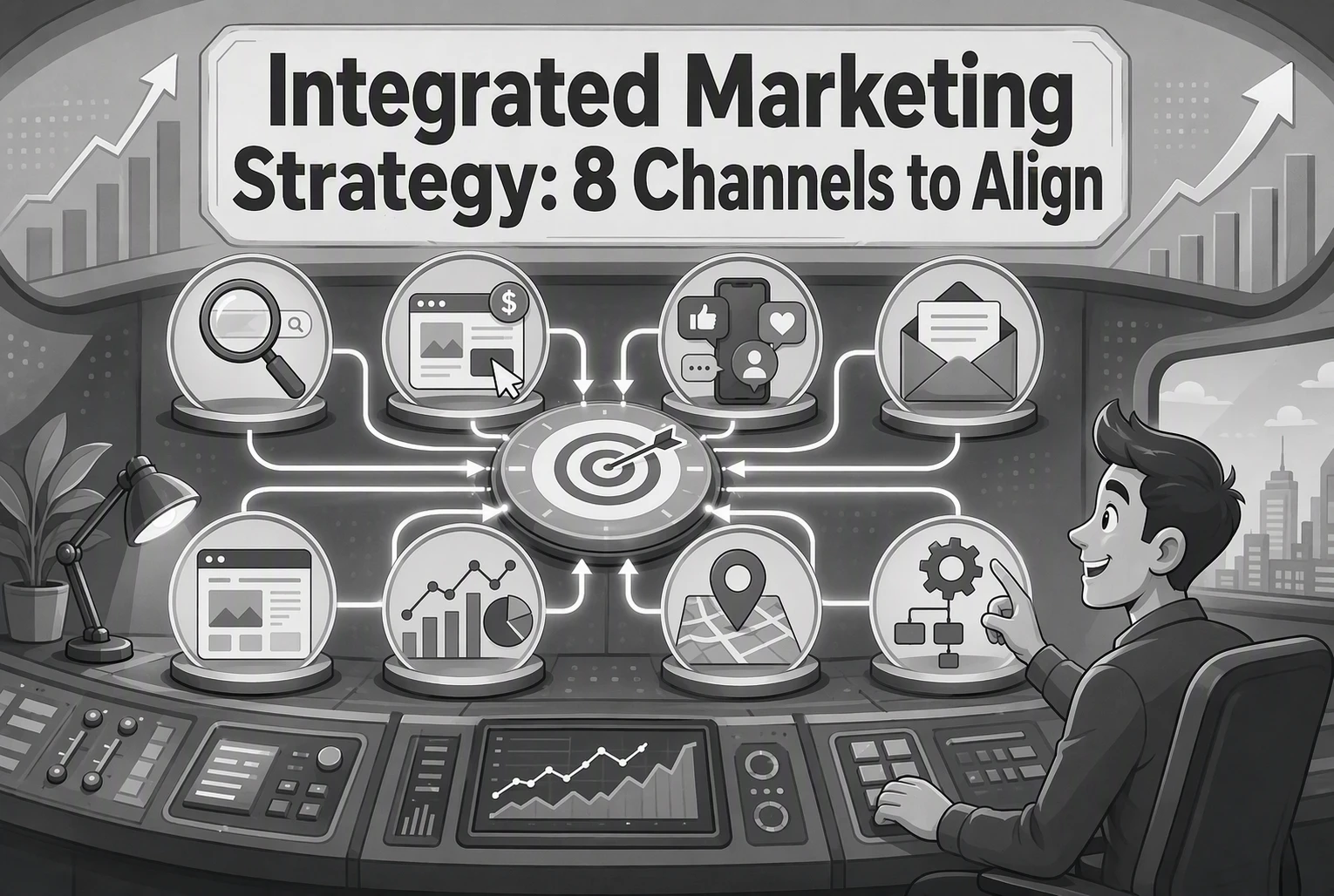
Integrated Marketing Strategy: 8 Channels to Align
Quick Summary: Integrated marketing aligns SEO, ads, reviews, and your website into one seamless system to improve local lead flow. It requires consistent messaging, offers, and tracking across eight key channels like your site, Google profile, paid media, and reviews. Regularly review and refine your strategy to ensure all channels work together to build trust and convert customers.
A homeowner searches for an emergency roofer, clicks your ad, scans your reviews, lands on your service page, and leaves because every step says something different. That is the core problem this guide fixes. Integrated marketing lines up your SEO, ads, website, reviews, and follow-up so they work as one system. We use a local-business-first integrated marketing framework built around real lead flow, clear messaging, and stronger conversion. Good integrated marketing removes friction and wasted spend.
What Integrated Marketing Really Means
Integrated marketing means one message, one offer, and one customer path across every channel. Multichannel just means you use many channels. Omnichannel goes further and connects the customer experience between them. For local businesses, the point is simple: search ads, SEO, your website, reviews, email, and follow-up should work like one system, not separate tasks.

People already move this way. BrightLocal found that 75% of consumers use more than one channel in a local search journey.
Local businesses feel the gap fast because small breaks cost real leads. If your ad promises same-day service, but your site is slow, reviews are stale, or your Google profile shows old hours, trust drops. BrightLocal also reports that people compare reviews, proximity, and complete listing info, not just rankings.
Also Read: Best Full-Service Marketing Partner for SMBs
The 8 Channels That Should Work as One System
These channels should not run alone. Your website, search, ads, reviews, and follow-up need to push the same offer and send leads into one clean path.
Website as the conversion hub - Your site should turn visits into calls, forms, and booked jobs. Keep pages fast, local, and built around one next step.
Local SEO and Google Business Profile - Google says Business Profile helps you show in Search and Maps, manage reviews, and capture calls or bookings from local intent Google Business Profile.
Paid search and paid media - Use Google Ads to cover high-intent terms you do not rank for yet. Match ad copy, landing pages, and offers so clicks do not leak.
Paid social and remarketing - Social ads build demand. Remarketing brings back people who clicked, compared, then left. Keep the message consistent with search and your site.
Content and social proof - Service pages, FAQs, case studies, and before-after proof help buyers trust you faster. Good content also supports SEO and lowers ad waste.
Reviews and reputation - Reviews shape local trust and visibility. Shopify notes reviews affect local search appearance, and many buyers read them before choosing Google reviews data.
If one channel promises speed, another promises price, and the website says something else, conversion drops.
How to Align Messaging, Offers, and Measurement
Use one core message everywhere. Your ad, landing page, Google Business Profile, and follow-up email should promise the same outcome. Mixed wording creates doubt and weakens response.

Track the full journey, not just the click. Google Analytics shows how users move through pages with Path exploration, and its attribution paths report shows which channels start, assist, and close conversions.
Choose the right next step for the visitor:
- Call for urgent, high-intent searches.
- Form for quote requests.
- Booking for ready-to-buy leads.
- Download or email capture for early research.
Match the CTA to intent, or you will lose good traffic.
Also Read: Growth Strategy for Service Brands: 7 Digital Plays
A Simple Playbook for Owners
Start with the hub, then add the spokes
Build one strong hub first: your website, core offers, tracking, and lead follow-up. Then add spokes one by one - local SEO, reviews, paid ads, email, and social. Keep the message and offer the same across each channel. Yext’s 2026 report shows people verify businesses across search, websites, reviews, and social before acting.
Review and refine every month
Set one monthly check-in. Review leads, cost per lead, close rate, missed calls, and review growth. Cut weak channels fast. Double down on what brings booked jobs. Ask every real customer for feedback, because the FTC’s fake review rule bans fake or bought reviews.
Need your SEO, ads, website, and follow-up working together? Talk to Harrigan Creative for a clear, local-first growth plan.
Frequently Asked Questions
Q1: Who offers the best integrated marketing strategy?
The best fit is the team that can connect SEO, ads, website design, reviews, and follow-up into one plan. For local service brands, Harrigan Creative stands out by building custom systems and giving clients full asset ownership.
Q2: How many channels should I align first?
Start with 3 to 4 core channels: website, local SEO, paid ads, and lead follow-up. That setup gives you traffic, conversion, and tracking fast. Add reviews, email, and social after the basics work.
Q3: How do I know if my channels are actually aligned?
Check for one offer, one message, and one clear next step across every channel. If your ads promise one thing but your website, Google Business Profile, or follow-up says another, your system is not aligned.
Conclusion
Integrated marketing works when every channel supports one path: get found, build trust, and convert. In 2026, 75% of consumers use multiple channels in local search, while 97% read reviews, so alignment beats isolated tactics.