
Local SEO Audit vs DIY Checklist: Which Finds More Issues?
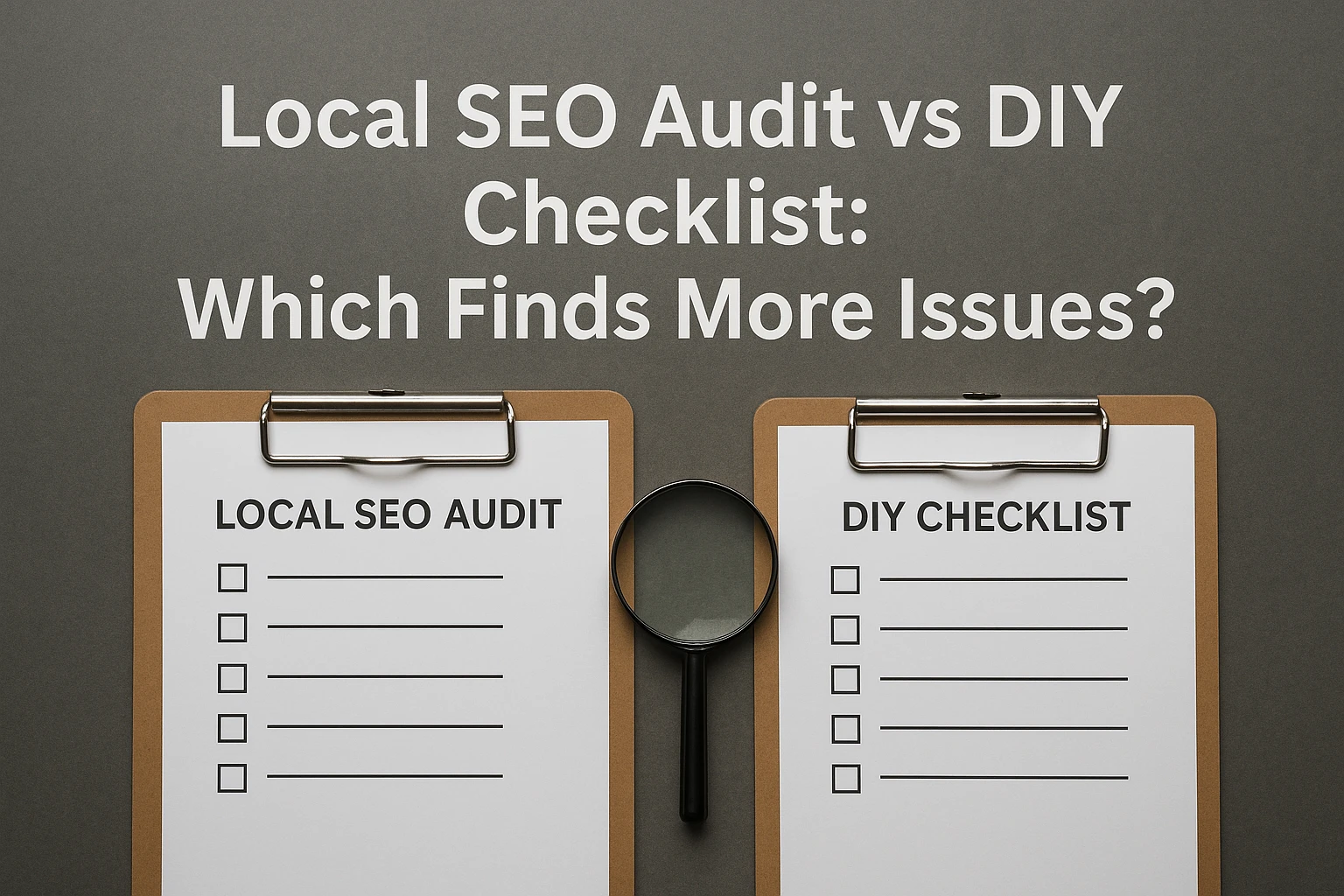
Quick Summary: A DIY checklist catches obvious errors like wrong hours or missing services, but a professional local SEO audit digs deeper to find hidden causes of lost visibility, such as conflicting phone numbers or location pages competing with each other. The article recommends starting with a checklist for simple single-location businesses, then hiring an audit if leads drop, rankings vary by area, or you have multiple locations. Audits also benchmark competitors and prioritize fixes by impact, which a checklist cannot do. Run an audit every six months or after major changes like a redesign or move.
A local SEO checklist catches easy gaps fast. A local SEO audit explains hidden ranking conflicts and weak spots competitors exploit. Use an SEO audit checklist for basic cleanup. Choose a local SEO audit for service areas, rebrands, or lost calls. This comparison shows what each review finds, how often to check, and what a credible audit includes.
Local SEO Audit vs DIY Checklist: At a Glance
| Professional local SEO audit | DIY local SEO checklist | |
|---|---|---|
| Scope | GBP, rankings, citations, reviews, site, technical SEO, links, and conversion paths | Common GBP, NAP, review, on-page, citation, and technical checks |
| Issue discovery | Finds visible errors plus conflicts, gaps, causes, and geographic patterns | Good at obvious omissions and inconsistencies you can verify manually |
| Competitive context | Benchmarks priority competitors and service areas | Usually limited unless competitors are checked separately |
| Prioritization | Ranks fixes by likely impact, effort, urgency, and business fit | Often produces an unchecked task list rather than a ranked diagnosis |
| Best for | Complex markets, stalled visibility, multiple areas, or revenue-led decisions | Simple single-location businesses and routine maintenance |
How Professional local SEO audit and DIY local SEO checklist Compare
Professional local SEO audit
A professional audit connects profile, site, competitor, and service-area signals to find causes behind lost visibility. It suits businesses with stalled growth, several locations, or high-value leads.
DIY local SEO checklist
A DIY checklist gives owners repeatable checks for profile details, reviews, citations, and pages. It fits simple, single-location firms handling routine upkeep.
What a Local SEO Audit Finds That a Checklist Misses
The Difference Between Checking and Diagnosing
A checklist confirms that items exist. An audit asks whether they work together to win local searches. Google weighs relevance, distance, and prominence in local results, so a checked box alone proves little. Google confirms these local ranking factors.
A complete profile can still lose if nearby rivals better match the search or have stronger trust signals.
The Hidden Issues That Require Context
An audit compares your site, profile, reviews, and map visibility against real local competitors. It can uncover:
- A wrong primary category that limits service searches
- Conflicting phone numbers across pages and listings
- Location pages that compete with each other
- A service area that does not match your sales territory
| Checklist result | Audit diagnosis |
|---|---|
| Hours are listed | Holiday hours differ across search results |
| Reviews exist | Recent reviews lag behind local rivals |
Also Read: 7 Conversion-Focused Website Features Service Businesses Need
DIY Local SEO Checklist: Where It Wins
Use DIY First When the Problems Are Obvious
Start DIY when your profile has clear gaps: wrong hours, missing services, few photos, or an old phone number. Google says complete, accurate details can improve visibility in local results. Check:
- Business name, address, and phone
- Primary category and service area
- Holiday hours and review replies

Fix facts first. They affect both searchers and trust.
What a Checklist Should Not Promise
A checklist cannot diagnose why you trail nearby rivals. Local results also depend on relevance, distance, and prominence, as Google explains.
| DIY checklist finds | It may miss |
|---|---|
| Missing profile fields | Competitor and ranking context |
| Broken contact details | Site-wide technical issues |
Also Read: 7 Lead Generation Assets Digital Marketing Teams Should Build
When a Professional Local SEO Audit Is Worth It
Signals You Have Outgrown DIY
A professional audit is worth it when your checklist says everything is complete, yet calls stay flat or rankings shift by neighborhood. Google weighs relevance, distance, and prominence, so one office-based search cannot show your true local reach. Google confirms these core local ranking factors.

- You serve several cities or have multiple locations.
- Leads dropped after a site redesign or profile change.
- Your business profile risks suspension or has duplicate listings.
- Competitors outrank you despite stronger reviews.
An audit finds the cause, not just missing boxes.
| DIY works best | Hire an expert |
|---|---|
| One location, simple services | Complex site or market |
Which Should You Choose: A Local SEO Audit or DIY Checklist?
Choose a DIY checklist if you have one location, a simple site, and need to fix basics like hours, categories, and contact details.
Choose a local SEO audit if leads dropped, rankings vary by area, or you have multiple locations. Google weighs relevance, distance, and prominence in local results, so diagnosis matters beyond a tick-box list. Google explains these factors
Use the checklist for upkeep. Use an audit to find the cause of costly gaps.
Harrigan Creative can audit the gaps a DIY checklist misses and build a clear fix plan. Request expert help today.
Frequently Asked Questions
Q1: What is a local SEO audit and why is it important?
It checks your local search signals, finds ranking blockers, and helps you focus fixes that can bring more nearby calls.
Q2: How often should you run a local SEO audit?
Run one every six months, and after a redesign, move, service change, or steep drop in leads.
Q3: What does a local SEO audit include?
It reviews business listings, site pages, reviews, map visibility, duplicate data, and tracking.
Conclusion
A DIY checklist catches clear errors. An expert audit finds causes, ranks risk, and checks local context. Google also requires accurate Business Profile details.